


Circular economy
Waste is a resource in the wrong place. We put it back.
The circular economy isn't a concept we talk about. It's the operating model we've built every service around recovering materials, conserving energy, and returning industrial waste to productive use rather than burying it.
What Circular Economy Actually Means for Industrial Waste
Closing the loop isn't simple. Most waste streams aren't designed for it.
The circular economy operates on a clear principle: resources should stay in use for as long as possible, at their highest value. For consumer goods, that sounds straightforward. For industrial waste, hazardous chemicals, contaminated metals, process by-products, and mixed-stream commercial waste, it requires technical expertise, the right infrastructure, and an operator who sees recovery as the objective, not a checkbox.
We don't just collect and dispose. We characterise waste streams to understand what value they contain, select the most appropriate recovery pathway, and provide documented proof that the material has re-entered productive use.
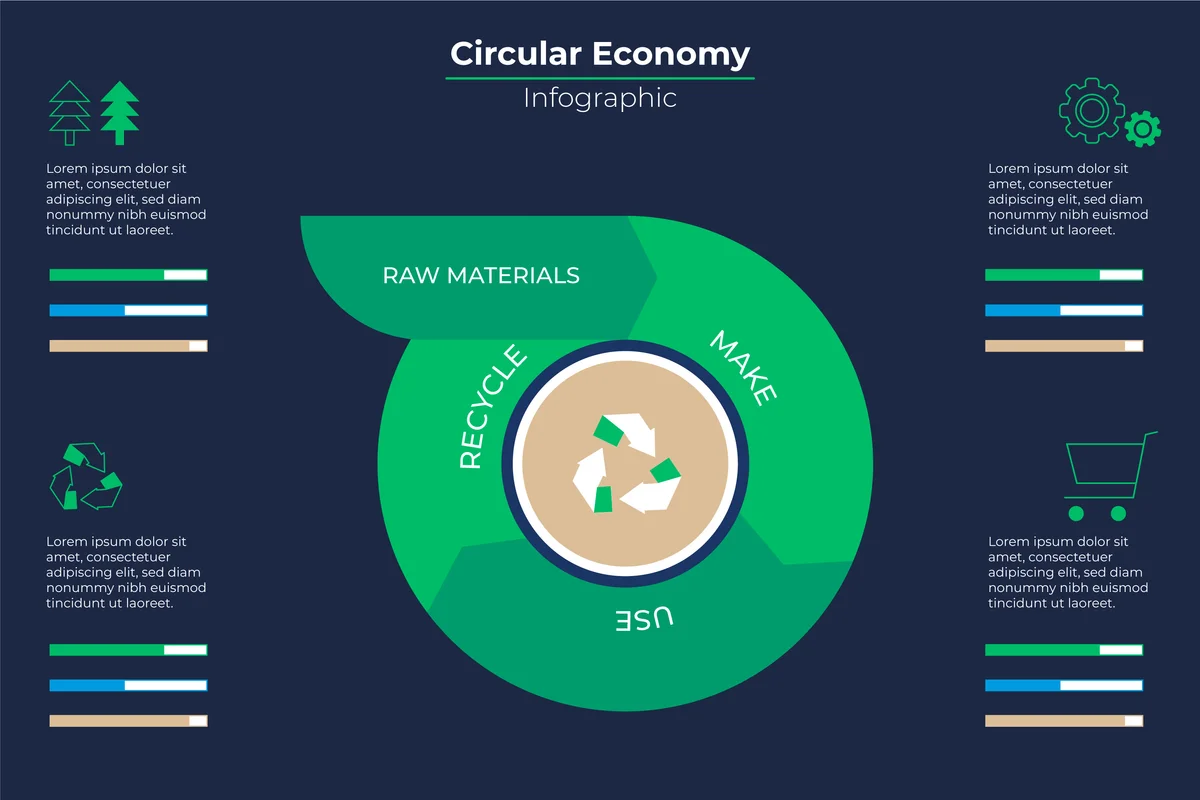
The Four Recovery Pathways
Prevent & Reuse
Before collection, we work with clients to identify whether process changes can reduce waste volumes at source. Reconditioning IBCs and drums keeps packaging in service longer eliminating waste before it's created. Where materials can't be reduced, we recover them for direct reuse, returning packaging to active service and feeding metal recovery back into the supply chain as secondary raw material.
Recycle
Cardboard, scrap metal, electrical waste, and plastics collected, segregated, and routed to appropriate recycling processors. Clean streams in, verified outputs out every tonne tracked.
Recover
For hazardous streams, we characterise the material to identify recovery options before disposal is considered. Where value exists, we find it and we document what happens to it.
Energy Recovery
Where physical recycling isn't feasible, we blend suitable waste streams into Cemfuel: an alternative fuel replacing virgin fossil fuels in industrial processes. Energy extracted, emissions avoided, landfill bypassed entirely.
Why It Matters Right Now
Landfill Tax at £130.75 per tonne
Every tonne sent to landfill carries a significant financial penalty. A structured recovery programme eliminates costs you shouldn't be absorbing.
Digital Waste Tracking, mandatory October 2026 Every waste movement will need to be digitally tracked in real time. Environmental Green Group is DWT-ready now.
ESG and Scope 3 reporting Circular recovery, documented and auditable, directly improves Scope 3 performance. Our monthly Carbon Handprint Certificates give you the data to prove it.
What Sets Environmental Green Group Apart
Plenty of waste contractors claim circular economy credentials. Fewer can demonstrate them in writing, for each individual client, every month. EGG can.
We start every client relationship by characterising waste streams, understanding not just what needs collecting, but what it contains, what can be recovered, and which route creates the highest circular value. We operate exclusively within the UK, through permitted and verified facilities only. No exporting waste to territories with lower environmental standards. No opaque supply chains.
What we tell you happened to your waste actually happened to your waste. And we prove it, in writing, every month.

"The circular economy isn't a transition we're preparing for. It's the model we've operated since day one because the alternative was never good enough."
Rob Jones, Managing Director - Environmental Green Group
Landfill diversion rate across managed waste streams
Circular recovery pathways: reuse, recycle, recover, energy
UK-based processing. No exports. Full traceability.
Landfill Tax per tonne, April 2026, the real cost of the wrong disposal route
Ready to move from linear to circular? Whether you're responding to the October 2026 DWT mandate, improving your Scope 3 reporting, or simply paying too much in landfill tax we'll show you exactly where your current waste programme sits and how a circular approach changes the numbers.